Geo Targeting: What Is It and How Does It Work in 2026?
Discover Geo Targeting, how it works, 7 proven benefits, different types, real-world examples, and best practices for advertising, SEO, e-commerce, and affiliate marketing.
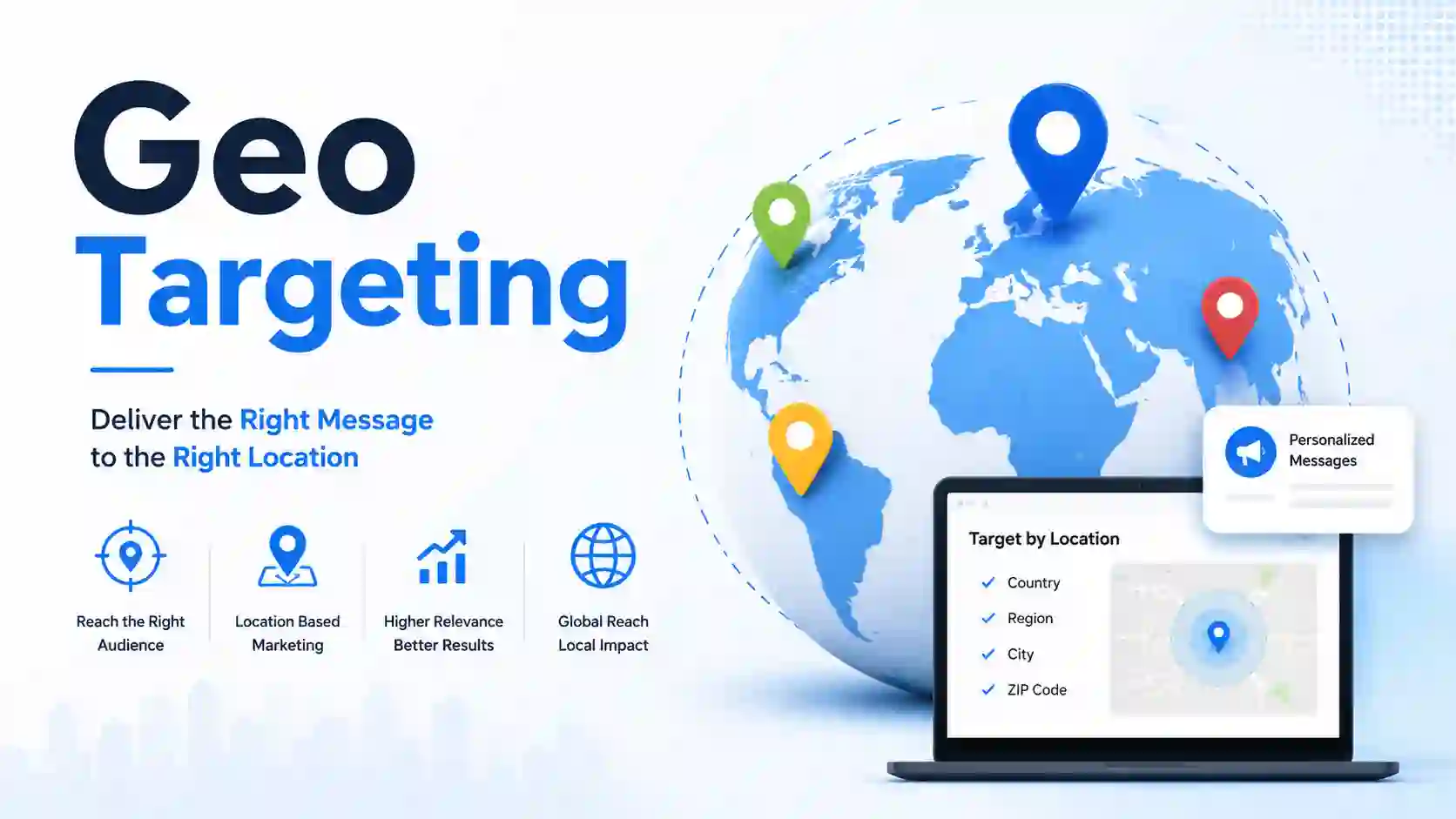
Geo Targeting: What Is It, How It Works, Benefits, Types, and Best Practices
Geo Targeting is one of the most useful techniques in digital marketing for reaching people based on where they are located. Instead of showing the same advertisement, content, offer, or landing page to everyone, businesses can use geographic information to make their marketing more relevant to specific countries, states, cities, regions, postal areas, or local markets.
For example, a restaurant in New York does not need to advertise its dinner menu to people living thousands of miles away. An e-commerce company may want to promote different products depending on the country where a visitor lives. A hosting company may display pricing, currency, promotions, or content based on the visitor's market.

Boost Your Links With Smart Geo Targeting
Show the right destination to the right audience based on their location with Linkrr.io. Create geo-targeted links, redirect visitors by country, and improve your campaigns with powerful link management tools.
This is where Geo Targeting becomes useful.
Geo Targeting can be used in paid advertising, SEO, affiliate marketing, e-commerce, content personalization, social media advertising, email marketing, and website optimization. Google Ads, for example, allows advertisers to target countries, regions, cities, postal areas, and geographic radiuses, while also providing options for reaching people based on physical presence or interest in a location.
In this guide, we will explain what Geo Targeting means, how it works, the different types of Geo Targeting, its advantages and disadvantages, how businesses can use it, and the best practices you should follow.
What Is Geo Targeting?
Geo Targeting is the practice of delivering advertisements, website content, offers, or marketing messages to users based on their geographic location.
The location can be broad or highly specific.
For example, you could target:
- A country
- A state or province
- A region
- A city
- A postal code
- A metropolitan area
- A neighborhood
- A specific radius around a location
The objective is to make marketing more relevant to the audience.
For example, an online store selling winter clothing could promote heavy jackets to customers in colder regions while showing lighter clothing to customers in warmer locations.
Similarly, a local service provider could target customers within a specific distance of its business.
Geo Targeting is therefore not simply about knowing where a visitor is located. It is about using geographic information to make a marketing decision.
How Does Geo Targeting Work?
Geo Targeting works by using signals that can help estimate a user's geographic location.
Depending on the platform and situation, these signals can include:
- IP address
- GPS information
- Wi-Fi information
- Mobile device signals
- Search behavior
- Location settings
- User-provided information
- Geographic information associated with a search
- Other platform-specific signals
For example, Google explains that its advertising systems may use IP addresses, device location, GPS, Wi-Fi, cell information, search terms, previous searches, and other signals to determine physical location or location interest.
It is important to understand that geographic targeting is not always perfectly accurate.
A user could be traveling, using a VPN, connecting through a corporate network, or accessing the internet through an IP address associated with another area.
Therefore, Geo Targeting should be treated as a targeting signal rather than an absolute guarantee of physical location.
Why Is Geo Targeting Important?
The main reason businesses use Geo Targeting is relevance.
Not every customer has the same needs.
Someone searching for a restaurant in Chicago is more valuable to a Chicago restaurant than someone living in another country.
Someone searching for a plumber near a specific city is more likely to become a customer if the plumber actually serves that location.
Geo Targeting helps businesses focus their marketing efforts on audiences that are more relevant to their products or services.
Google also describes geographic targeting as a way to focus advertising on the locations where businesses can find their customers and potentially improve campaign efficiency.
This can help businesses:
- Reduce wasted advertising spend
- Improve audience relevance
- Create localized campaigns
- Improve conversion opportunities
- Customize offers
- Promote local services
- Build regional landing pages
- Analyze performance by location
Types of Geo Targeting
There are several ways businesses can implement Geo Targeting.
Country-Level Targeting
Country-level targeting is the broadest common form of Geo Targeting.
A company can target an entire country instead of individual cities or regions.
For example:
- United States
- United Kingdom
- Canada
- India
- Australia
This approach is useful for businesses that sell products or services throughout an entire country.
An international e-commerce company, for example, might create separate campaigns for the United States, Canada, United Kingdom, and Australia.
Each campaign could use different:
- Currency
- Language
- Pricing
- Promotions
- Shipping information
- Product availability
- Advertising messages
State or Province Targeting
Businesses can make their targeting more specific by selecting states, provinces, or other regions within a country.
This is useful when a business operates in selected areas rather than nationwide.
For example, a service provider could target several states where it has employees and exclude states where it does not operate.
City-Level Targeting
City targeting allows advertisers to focus on specific cities.
This is particularly useful for local businesses.
Examples include:
- Restaurants
- Hotels
- Dentists
- Gyms
- Real estate companies
- Local repair services
- Cleaning companies
- Salons
- Local retailers
A restaurant could create a campaign specifically targeting people in the city where it operates.
Postal Code Targeting
Postal or ZIP code targeting provides an even more precise geographic approach where the advertising platform supports it.
This can be useful for businesses that serve particular neighborhoods or delivery areas.
For example, a local delivery business might only accept orders from selected postal codes.
Instead of advertising to an entire city, it can concentrate its marketing on the areas it actually serves.
Radius Targeting
Radius targeting allows businesses to target people within a specified distance from a location.
For example, a business could target people within:
- 5 kilometers
- 10 kilometers
- 20 kilometers
- 25 miles
The available options depend on the advertising platform.
Google Ads supports radius targeting around a location, subject to its targeting and privacy requirements.
This approach can be especially useful for local businesses.
Geo Targeting in Google Ads
Google Ads is one of the most common places where marketers use Geo Targeting.
Advertisers can select geographic locations where their ads should appear.
Depending on the campaign and available settings, locations can include countries, regions, cities, postal areas, and radius-based areas.
One important concept is the difference between a person's physical location and their interest in a location.
For example, imagine someone is physically located in Paris but searches for a hotel in New York.
That person is not physically in New York, but their search indicates an interest in New York.
Google Ads can use signals like search terms and other behavior to identify location interest.
Advertisers should therefore understand their campaign's location settings rather than assuming that selecting a city automatically means every impression comes from someone physically located there.
Geo Targeting for Local Businesses
Local businesses are among the biggest beneficiaries of Geo Targeting.
Consider a plumbing company.
If the company only serves customers within 30 miles of its office, showing advertisements to users hundreds of miles away wastes money.
Geo Targeting allows the company to focus its advertising on areas where it can actually provide service.
A local business can combine Geo Targeting with:
- Local SEO
- Google Business Profile
- Location-specific landing pages
- Local keywords
- Customer reviews
- Local offers
- Call extensions
- Location information
The result is a marketing strategy focused on people who can realistically become customers.
Geo Targeting for E-Commerce
E-commerce businesses can also benefit significantly from Geo Targeting.
An online store may have customers across several countries but different products, shipping options, taxes, currencies, or promotions in each market.
For example, an e-commerce company could display:
United States: Prices in USD and US shipping information.
United Kingdom: Prices in GBP and UK shipping information.
Canada: Prices in CAD and Canadian shipping information.
This creates a more relevant experience.
However, businesses should avoid automatically changing important information solely based on an imperfect location signal.
It is often better to provide a clear option for users to change their country or region manually.
Geo Targeting for Affiliate Marketing
Geo Targeting can be particularly useful for affiliate websites.
Suppose an affiliate website promotes hosting services.
A visitor from the United States may be shown a US-specific offer, while a visitor from India may see an India-specific promotion if the affiliate program supports different offers.
Similarly, a coupon website could show:
- US deals
- UK deals
- Canadian deals
- Australian deals
- Indian deals
based on the visitor's market.
This can improve relevance and potentially increase conversions.
However, affiliate marketers should always verify whether a particular merchant permits geographic targeting, redirects, cloaking, or location-based affiliate links.
Geo Targeting and SEO
Geo Targeting also plays an important role in SEO, particularly for businesses targeting local or regional audiences.
A business may create pages designed for searches such as:
- Web design company in New York
- Plumber in Chicago
- Best restaurants in London
- Hosting services in India
- Real estate agents in Toronto
However, creating hundreds of nearly identical city pages simply by changing the city name is not a good strategy.
Each location page should provide genuine value.
For example, a useful location page could include:
- Services available in that location
- Local pricing
- Service areas
- Local customer information
- Local contact details
- Relevant testimonials
- Location-specific FAQs
- Useful local information
Geo Targeting works best when the content actually reflects the needs of the target location.
Geo Targeting vs Local SEO
Geo Targeting and Local SEO are related but not identical.
Geo Targeting is primarily a targeting technique used to deliver marketing or content based on geographic information.
Local SEO focuses on improving organic visibility for location-based searches.
For example, a restaurant could use Geo Targeting to show advertisements to people within a certain radius.
At the same time, it could use Local SEO to appear in organic search results for searches related to restaurants in its city.
Using both strategies can create a stronger local marketing system.
Benefits of Geo Targeting
1. Better Audience Relevance
The biggest benefit is relevance.
People in different locations may have different needs, preferences, currencies, languages, and purchasing behavior.
Localized marketing can address these differences.
2. Reduced Advertising Waste
If your business only operates in certain areas, targeting those areas can reduce exposure to people you cannot serve.
Google specifically recommends choosing locations based on where your customers can actually be found rather than simply targeting the location of your physical business.
3. Better Local Campaigns
Local businesses can create campaigns specifically for the communities they serve.
This can make advertisements more meaningful.
4. Personalized Offers
Businesses can provide different promotions to different regions.
For example, a retailer could offer a regional shipping promotion where delivery costs are lower.
5. Better Budget Allocation
Businesses can identify which geographic areas generate the best results and allocate more resources to those markets.
6. Improved Customer Experience
Showing the correct currency, shipping information, services, language, and offers can make a website easier to use.
Disadvantages of Geo Targeting
Geo Targeting also has limitations.
Location Is Not Always Perfect
A geographic signal may not represent a user's exact physical location.
Google notes that location targeting relies on multiple signals and that 100% accuracy is not guaranteed.
VPNs Can Affect Location
Users connected through VPNs may appear to be in a different geographic area.
Small Target Areas May Have Limited Reach
Very small geographic targets may not generate enough impressions or data.
Privacy Considerations
Businesses should handle location-related information responsibly and comply with applicable privacy laws and platform policies.
Incorrect Targeting Can Reduce Performance
If you target the wrong locations, you may exclude valuable customers or spend money on people you cannot serve.
Best Practices for Geo Targeting
Understand Your Customers
Before creating geographic campaigns, determine where your customers actually live or where they need your services.
Do not assume that your business location automatically represents your ideal customer location.
Start Broad and Refine
If you do not have enough data, start with a reasonable geographic area and analyze performance.
You can then identify locations producing strong results.
Exclude Locations You Cannot Serve
Exclusions can be just as important as targeting.
If your business does not serve a particular state or region, excluding it can prevent unnecessary advertising exposure.
Use Location-Specific Landing Pages
If you target multiple locations, create useful pages that genuinely address each market.
Avoid producing dozens of pages with almost identical content.
Track Performance by Location
Monitor metrics such as:
- Impressions
- Clicks
- Click-through rate
- Conversion rate
- Cost per conversion
- Revenue
- Return on ad spend
A location producing many clicks but few conversions may require a different strategy.
Match Language and Location
Your advertising language should make sense for your target market.
Google also recommends keeping language and location targeting consistent when appropriate.
Test Different Geographic Areas
Do not assume that your biggest city or largest market will automatically generate the best results.
Run tests and let performance data guide your decisions.
Important Geo Targeting Information and Resources
| Topic | Important Information |
|---|---|
| Definition | Delivering ads, content, or offers based on geographic location |
| Common targets | Country, state, region, city, postal code, radius |
| Common signals | IP address, device location, GPS, Wi-Fi, search behavior |
| Main purpose | Reach more relevant audiences |
| Best for | Local businesses, e-commerce, advertising, affiliate marketing, SEO |
| Google Ads | Supports geographic targeting and location exclusions |
| Radius targeting | Useful for businesses serving a defined local area |
| Location interest | Can target people who show interest in a geographic area |
| Accuracy | Geographic signals are not guaranteed to be 100% accurate |
| Best practice | Target locations where customers can actually be served |
| SEO use | Localized content and location-specific search intent |
| Key metric | Conversion performance by geographic area |
Common Geo Targeting Mistakes
One common mistake is targeting an entire country when the business only serves a few cities.
Another mistake is creating location pages with no unique value.
Businesses also sometimes focus exclusively on where they are located instead of where their customers are located.
For example, an online retailer should generally consider the locations where it delivers products rather than only targeting the city where its warehouse is located. Google makes a similar distinction in its guidance for geographic targeting.
Another mistake is failing to monitor geographic performance.
A campaign should not be considered successful simply because it receives clicks.
The important question is whether those clicks produce valuable actions.
Conclusion
Geo Targeting is an important digital marketing technique that helps businesses reach audiences based on geographic location.
Instead of treating every visitor or potential customer the same, businesses can create more relevant campaigns for different countries, states, cities, regions, postal areas, or geographic radiuses.
For local businesses, Geo Targeting can help concentrate advertising on people who can actually visit or use their services. For e-commerce businesses, it can help create region-specific experiences. For affiliate websites, it can help present relevant offers and merchants. For SEO, it can support content strategies focused on local search intent.
However, successful Geo Targeting requires more than simply selecting a location.
You need to understand your customers, choose locations carefully, monitor geographic performance, exclude areas you cannot serve, and create useful localized experiences.
It is also important to remember that location signals are not always perfectly accurate. Therefore, businesses should use Geo Targeting strategically rather than assuming that every detected location is exact.
The best approach is to start with your actual customer data, identify the geographic markets that matter most, create relevant campaigns, and continuously analyze performance.
When used correctly, Geo Targeting can help businesses spend their marketing budget more efficiently, provide more relevant experiences, and connect with customers in the places where they are most likely to need their products or services.
Frequently Asked Questions

Verified Expert in deals and money-saving tips

No comments yet. Be the first to share your thoughts!