7 Best Hosting Company for WordPress in 2026: Compare Top Providers
Looking for the best hosting company for WordPress? Compare 7 popular hosting providers, including Hostinger, Bluehost, SiteGround, and Kinsta. Discover their features, benefits, pricing considerations, and tips for choosing the right WordPress hosting for your website.
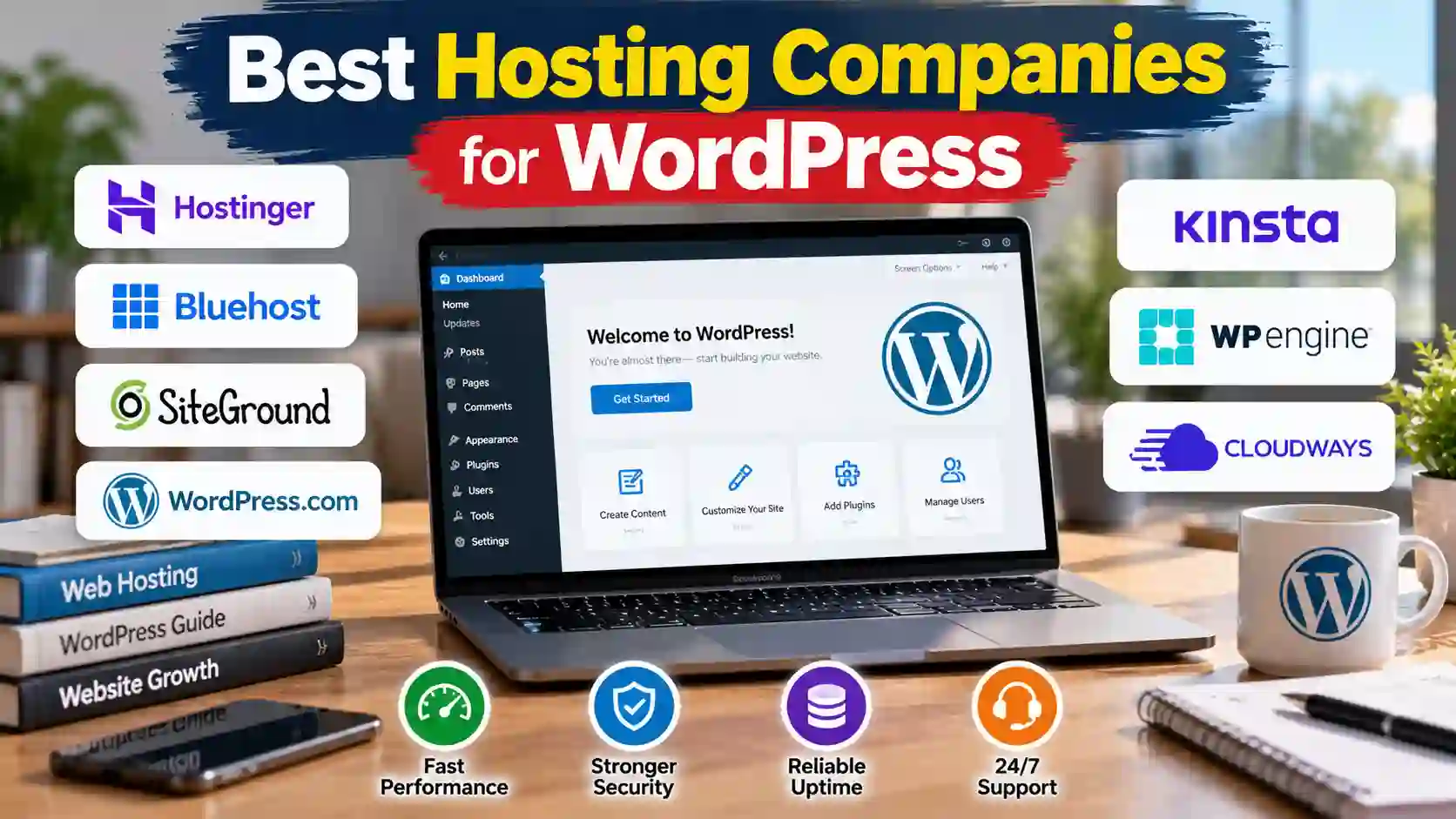
Hosting Company for WordPress: 7 Best Providers for Your Website
Choosing the right hosting company for WordPress is one of the most important decisions you will make when creating a website. Whether you want to start a personal blog, build a business website, publish educational content, launch an affiliate marketing website, or run an online store, your hosting provider plays an important role in your website's speed, security, reliability, and long-term growth.
With so many hosting companies available, choosing the best option can feel confusing. Some providers offer affordable shared hosting for beginners, while others specialize in managed WordPress hosting, cloud hosting, or high-performance servers for growing businesses.
The cheapest hosting plan is not always the best choice. You should consider the renewal price, server resources, backup options, customer support, website migration services, and the features included in your selected plan.
In this guide, we will explore the best hosting companies for WordPress, compare their main features, explain how to choose a suitable provider, and share practical tips for getting the best value for your money.
What Is a Hosting Company for WordPress?
A hosting company for WordPress is a service provider that stores your website's files and database on a server and makes them accessible through the internet.
When someone visits your website, the hosting server processes the request and delivers the required pages, images, scripts, and other content to the visitor's browser.
WordPress is a content management system that allows you to create and manage a website without building everything from scratch. However, a self-hosted WordPress website needs a compatible hosting environment to operate.
Most hosting companies provide tools to install WordPress, manage domains, configure SSL certificates, create email accounts, and maintain website backups.
There are different types of WordPress hosting, including:
Shared hosting for beginners and small websites.
Managed WordPress hosting for users who want specialized maintenance and support.
Cloud hosting for websites that need flexible resources.
VPS hosting for websites requiring more control and dedicated server resources.
Dedicated hosting for demanding websites with specialized infrastructure requirements.
The right option depends on your budget, technical knowledge, traffic levels, and website requirements.
Important Links and Information About WordPress Hosting
The following table contains useful links for comparing hosting companies and understanding WordPress hosting requirements.
| Resource | Purpose | Official Link |
|---|---|---|
| WordPress Hosting Directory | Explore hosting recommendations from WordPress.org | https://wordpress.org/hosting/ |
| WordPress Requirements | Review recommended server software and requirements | https://wordpress.org/about/requirements/ |
| Hostinger | Explore WordPress hosting plans | https://www.hostinger.com/wordpress-hosting |
| Bluehost | Explore WordPress hosting plans | https://www.bluehost.com/wordpress/ |
| SiteGround | Explore WordPress hosting plans | https://www.siteground.com/wordpress-hosting.htm |
| WordPress.com | Explore fully hosted WordPress plans | https://wordpress.com/hosting/ |
| Kinsta | Explore managed WordPress hosting | https://kinsta.com/wordpress-hosting/ |
| WP Engine | Explore managed WordPress hosting | https://wpengine.com/wordpress-hosting/ |
| Cloudways | Explore managed cloud hosting | https://www.cloudways.com/en/wordpress-hosting.php |
Plan names, prices, included features, and eligibility for promotional offers can change. Check the provider's official website before purchasing a hosting plan.
7 Best Hosting Companies for WordPress
There is no single hosting company that is perfect for every website. A beginner starting a personal blog may need an affordable plan, while an established business may prioritize managed backups, staging environments, advanced security, and scalable resources.
Here are seven hosting providers worth considering.
1. Hostinger: An Affordable Hosting Company for WordPress
Hostinger is a popular option for website owners who want affordable hosting with beginner-friendly management tools.
It offers WordPress hosting plans designed to simplify website setup and everyday management. Depending on the selected plan and current offering, features may include WordPress installation, SSL certificates, backups, migration assistance, caching, and additional website management tools.
Hostinger can be a practical option for bloggers, affiliate marketers, small businesses, and website owners who want to manage their websites without dealing with extensive server administration.
Key features
WordPress-focused hosting plans.
Beginner-friendly hosting dashboard.
WordPress installation tools.
SSL and security features on eligible plans.
Website migration options.
Different hosting tiers for varying resource requirements.
Advantages
One of Hostinger's main attractions is its combination of affordability and ease of use. Beginners can get started without needing extensive technical knowledge, while growing websites can consider more powerful hosting plans.
Website migration assistance can also be helpful if you already have a WordPress website hosted elsewhere.
Things to consider
Promotional prices may require a longer initial subscription, and renewal prices can be higher. Storage, backup frequency, website limits, and other features depend on the selected plan.
Before purchasing, review the full renewal price and confirm that the plan supports your expected traffic and storage needs.
Best for: Beginners, bloggers, affiliate websites, and small businesses looking for budget-conscious WordPress hosting.
Official website: https://www.hostinger.com/wordpress-hosting
2. Bluehost: A Beginner-Friendly WordPress Hosting Provider
Bluehost is another hosting company worth considering if you are launching your first WordPress website.
It offers WordPress-oriented hosting services and tools designed to make website setup easier. Depending on the selected plan, users may receive WordPress installation assistance, SSL certificates, domain-related benefits, and website management features.
Bluehost can be suitable for users who want a relatively straightforward way to establish a website and manage it through a hosting dashboard.
Key features
WordPress-oriented hosting plans.
Beginner-friendly setup tools.
Website management dashboard.
SSL availability on eligible plans.
Hosting options for blogs and business websites.
Additional features depending on the subscription.
Advantages
Bluehost is worth considering if you are new to website development and want a hosting provider that supports the process of setting up a WordPress website.
Its WordPress-focused tools may help reduce the amount of manual configuration required.
Things to consider
Compare the introductory price with the renewal price before purchasing. Check which backup, email, security, and migration features are included in the exact plan you select.
Best for: New bloggers, personal websites, and small businesses looking for guided WordPress setup.
Official website: https://www.bluehost.com/wordpress/
3. SiteGround: A Hosting Option for Small Businesses
SiteGround is a hosting provider that offers WordPress-focused services for bloggers, businesses, and website owners who value managed tools and technical support.
Its hosting environment includes WordPress management features, and selected plans provide capabilities such as automated backups, caching, staging, and security tools.
The precise availability of each feature depends on the hosting plan.
Key features
WordPress installation and management tools.
Performance optimization features.
Backup and security options.
Staging capabilities on eligible plans.
Support for business websites and online stores.
Advantages
SiteGround may be suitable for businesses that want more WordPress management features than a basic hosting package offers.
Its available tools can help simplify site maintenance and testing, particularly when you need to make changes before publishing them.
Things to consider
Review renewal pricing and the resources available under each plan. Check storage limits, website limits, and the included backup retention period before making a decision.
Best for: Small businesses, professional blogs, and users who value managed WordPress tools.
Official website: https://www.siteground.com/wordpress-hosting.htm
4. WordPress.com: Hosting With Managed Website Maintenance
WordPress.com offers a hosted website platform that handles much of the underlying hosting infrastructure for you.
Unlike a typical self-hosted WordPress.org installation, WordPress.com combines website hosting and platform management in one service. This can reduce the amount of server maintenance you need to handle yourself.
It is important to understand the difference between WordPress.com and WordPress.org before choosing a service.
WordPress.org provides the open-source WordPress software that you can install on compatible hosting providers. WordPress.com provides hosting plans and a managed environment for building and maintaining websites.
Key features
Managed hosting environment.
Website creation and management tools.
Hosting infrastructure maintained by the provider.
Plan-dependent backups and security features.
Different subscription options for different website needs.
Advantages
WordPress.com can be appealing to users who prefer a more integrated platform rather than managing hosting and server configuration separately.
It may be particularly convenient for users who want to focus on publishing content and maintaining their website.
Things to consider
Check the features, plugin access, customization options, storage limits, and pricing associated with your chosen plan. These can differ substantially across subscriptions.
Best for: Bloggers, creators, and website owners who prefer an integrated managed platform.
Official website: https://wordpress.com/hosting/
5. Kinsta: Managed WordPress Hosting for Growing Websites
Kinsta focuses on managed WordPress hosting for businesses, publishers, agencies, and other website owners who need a more specialized hosting environment.
Managed WordPress hosting generally means that the provider handles important infrastructure tasks and offers tools designed specifically for WordPress websites.
Kinsta is worth considering when performance management, staging, backups, security, and developer-oriented features are more important than finding the lowest introductory price.
Key features
Managed WordPress hosting.
WordPress-focused management tools.
Staging environments.
Backup and security capabilities.
Infrastructure designed for professional websites.
Plans with different resource and website allowances.
Advantages
Managed hosting can reduce the amount of server administration required from a website owner. This is particularly useful for businesses that would rather spend time on content, marketing, products, and customers.
Things to consider
Premium managed hosting can cost more than entry-level shared hosting. Compare visitor allowances, resource limits, storage, backup policies, and overage charges before purchasing.
Best for: Professional publishers, businesses, agencies, and growing WordPress websites with a higher hosting budget.
Official website: https://kinsta.com/wordpress-hosting/
6. WP Engine: A Specialized Managed WordPress Hosting Company
WP Engine is another provider focused on managed WordPress hosting.
It is designed for website owners who want specialized WordPress infrastructure and management features rather than a basic shared hosting account.
Depending on the plan, its services may include staging, development tools, security features, backup functionality, and support for professional website workflows.
Key features
Managed WordPress hosting.
Development and staging tools.
Website management features.
Security and backup capabilities.
Hosting plans for professional projects and businesses.
Advantages
WP Engine may be a strong candidate for businesses that need a hosting environment tailored to WordPress development and maintenance.
Staging and development tools can help teams test updates before applying them to a live website.
Things to consider
Review the plan's website limits, visitor allowances, storage, included services, and pricing. Check whether any plugins or technical configurations you rely on are restricted by the platform.
Best for: Businesses, agencies, and professional website owners who want managed WordPress hosting.
Official website: https://wpengine.com/wordpress-hosting/
7. Cloudways: Managed Cloud Hosting for WordPress
Cloudways provides a managed cloud hosting platform that can be used to run WordPress websites on supported cloud infrastructure.
Cloud hosting may be useful when you need more flexibility than a basic shared hosting package provides. Depending on the selected infrastructure and configuration, you can choose resources suited to your website's workload.
Cloudways is worth evaluating if your website is growing and you want a managed interface for working with cloud servers.
Key features
Managed cloud hosting.
WordPress deployment tools.
Server and application management.
Scaling options depending on the selected provider.
Performance and security tools.
Advantages
Cloud hosting can offer more flexibility for websites that need additional server resources as traffic grows.
Cloudways also provides a management layer intended to simplify common server tasks.
Things to consider
Understand the pricing model, server configuration, backup costs, email requirements, and any additional charges. Managed cloud hosting can involve more decisions than a basic shared hosting plan.
Best for: Growing websites, agencies, and businesses that need flexible cloud infrastructure.
Official website: https://www.cloudways.com/en/wordpress-hosting.php
Comparison Table: Which Hosting Company Is Best for WordPress?
The following comparison summarizes the primary use case for each provider. These are general recommendations rather than a guarantee of performance or value on every plan.
| Hosting Company | Best For | Hosting Approach | Main Consideration |
|---|---|---|---|
| Hostinger | Beginners and budget-conscious website owners | WordPress and shared hosting options | Check renewal pricing and plan limits |
| Bluehost | New bloggers and small websites | WordPress-oriented hosting | Compare included features and renewals |
| SiteGround | Small businesses and professional blogs | WordPress-focused hosting | Review resource limits and renewal costs |
| WordPress.com | Users wanting an integrated hosted platform | Managed platform | Check plan-specific customization and plugin access |
| Kinsta | Professional websites and growing businesses | Managed WordPress hosting | Higher-budget hosting requirements |
| WP Engine | Businesses and agencies | Managed WordPress hosting | Check website allowances and plan restrictions |
| Cloudways | Growing sites needing flexible resources | Managed cloud hosting | Understand infrastructure and additional costs |
How to Choose the Best Hosting Company for WordPress?
Choosing the right hosting provider involves more than comparing introductory prices. Consider the following factors before purchasing a plan.
1. Compare the Total Hosting Cost
Hosting companies frequently advertise promotional prices that apply only to the initial subscription period.
Before purchasing, check:
The introductory price.
The renewal price.
The minimum subscription period.
Domain registration and renewal charges.
Backup and security add-on costs.
Migration fees, if applicable.
Email hosting costs.
Taxes and any other applicable fees.
For example, a plan that appears inexpensive for the first year may become more expensive at renewal. Compare the total cost over the period you intend to use the service.
2. Check WordPress Compatibility
Your hosting provider must support the technical requirements of your WordPress installation.
WordPress.org currently recommends PHP 8.3 or greater, MySQL 8.0 or greater or MariaDB 10.11 or greater, and HTTPS support. A provider may support additional software configurations, and the exact compatibility requirements can vary with the WordPress version you run.
You can review the official requirements here:
https://wordpress.org/about/requirements/
Choose a provider that supports maintained software versions and allows you to update your website safely.
3. Evaluate Website Speed and Server Resources
Website performance depends on multiple factors, including the hosting server, available CPU and memory, storage, caching, database performance, and the way your WordPress website is built.
A website with a lightweight theme and optimized images may run well on a modest hosting plan. A website with a large database, heavy page builder, extensive plugins, or substantial traffic may need additional resources.
Check the provider's resource limits rather than assuming every plan offers the same performance.
4. Look for Reliable Backups
Backups are essential for protecting your website against accidental deletion, failed updates, malware, and other problems.
Before purchasing, find out whether the hosting company provides automatic backups, how frequently backups are created, and how long they are retained.
Also check whether restoring a backup is included or requires additional charges.
Even when your hosting provider supplies backups, maintaining an independent copy in a separate location is a good practice.
5. Review Security Features
A reliable hosting company should provide a suitable security foundation for your WordPress website.
Look for HTTPS support, secure account access, server maintenance, and clear information about its security practices.
Depending on your website's needs, you may also want malware scanning, web application firewall capabilities, automatic backups, and additional protection against malicious traffic.
Remember that hosting security is only one part of website security. Keep WordPress, themes, and plugins updated, use strong passwords, and install software from trusted sources.
6. Check Customer Support Availability
Technical problems can occur even on good hosting platforms. Before choosing a provider, review its support channels and availability.
Consider whether support is offered through live chat, tickets, telephone, or another channel. Check whether support staff can help with WordPress troubleshooting, migration, database issues, and server configuration.
For a business website, support quality may be more valuable than a small difference in the monthly hosting price.
7. Check Migration Options
If you already have a WordPress website, migration assistance can make changing providers easier.
Some hosts offer automatic migration tools or guided transfer services. Others provide migration plugins or documentation that you can follow yourself.
Before purchasing, verify whether the service is included in your plan, whether there are website-size restrictions, and whether your particular hosting environment is supported.
8. Understand Website and Storage Limits
Some hosting plans restrict the number of websites, storage capacity, file usage, databases, or other resources.
If you operate multiple websites, confirm that the plan allows you to host the required number of installations.
If your website contains many images, downloadable PDFs, or large media files, ensure that you have sufficient storage and understand the provider's usage policies.
Which Hosting Company Is Best for Different Types of WordPress Websites?
The best hosting company depends on what you intend to publish and how your website will grow.
Best Hosting for Beginners
If you are starting your first WordPress blog, choose a provider with simple installation, a user-friendly dashboard, SSL support, backups, and helpful customer support.
Hostinger and Bluehost are worth comparing for this purpose. Evaluate their current entry-level plans and renewal pricing before making a decision.
Best Hosting for Affiliate Marketing Websites
Affiliate marketing websites need reliable availability, reasonable loading speed, and enough resources to serve visitors who arrive from search engines, social media, and advertising campaigns.
Hostinger can be a practical starting point for a small or growing affiliate website if the selected plan provides sufficient resources.
As traffic grows, monitor your website's performance and resource usage. Consider upgrading if you experience frequent slowdowns or reach your plan's limits.
Best Hosting for Educational Websites
Educational websites often publish articles, downloadable study materials, results updates, admission information, and other resource-heavy content.
For this type of website, pay particular attention to storage, database performance, backup frequency, and the ability to handle traffic spikes during important result or admission periods.
An affordable WordPress hosting plan may be sufficient for a smaller educational blog. A larger website with substantial traffic may need a more powerful hosting environment.
Best Hosting for Small Business Websites
A business website should prioritize reliability, security, customer support, and easy maintenance.
SiteGround, Bluehost, Hostinger, and managed hosting providers are worth comparing depending on your budget and requirements.
If the website generates leads or handles customer inquiries, ensure that forms, email delivery, backups, and security features are properly configured.
Best Hosting for WooCommerce Websites
WooCommerce websites require additional attention because they handle products, orders, customers, and transactional data.
Choose a hosting plan with sufficient database and server resources, reliable backups, suitable security features, and a clear restoration process.
Managed WordPress hosting or a more powerful cloud plan may be appropriate for a growing online store.
Avoid choosing a plan based solely on its advertised price. Check whether the hosting environment can support your store's expected traffic and transaction volume.
Is Cheap WordPress Hosting Worth It?
Cheap WordPress hosting can be a sensible choice when you are starting a website or operating a project with modest traffic.
An entry-level plan may provide everything you need to publish articles, build an audience, and test a business idea.
However, cheap hosting can become a problem if the plan lacks sufficient resources, reliable backups, or the support you need.
Before purchasing a low-cost plan, ask yourself:
Can it handle my expected traffic?
Does it include SSL support?
Are backups included?
What is the renewal price?
Can I upgrade easily as my website grows?
Are there restrictions on storage, websites, or resource usage?
If the answers meet your requirements, an affordable plan can be a reasonable starting point.
You do not necessarily need premium managed hosting for every WordPress website. Choose the level of hosting that matches your actual needs rather than paying for resources you will not use.
How to Get Started With a WordPress Hosting Company?
Once you have selected a hosting provider, follow these steps to launch your website.
Step 1: Choose a Hosting Plan
Compare the available plans and select one that matches your budget, traffic expectations, storage requirements, and number of websites.
Read the terms carefully before completing your purchase.
Step 2: Register or Connect Your Domain
You can register a new domain through your hosting provider or connect a domain that you already own.
If you are using an existing domain, follow the provider's instructions to configure the DNS records or nameservers.
You generally do not need to transfer domain registration simply to change hosting providers.
Step 3: Install WordPress
Many hosting companies offer a WordPress installer or a guided setup process.
Follow the instructions to create your WordPress installation and administrator account.
Choose a strong password and avoid using predictable administrator credentials.
Step 4: Install a Theme and Essential Plugins
Select a theme that suits your website's purpose and works well on mobile devices.
Install only the plugins you need. Too many poorly maintained or resource-intensive plugins can create security and performance problems.
Typical website requirements may include backups, security, SEO, caching, and contact forms.
Step 5: Configure SSL and Backups
Enable HTTPS and confirm that the website loads securely.
Configure automatic backups if available and create an independent backup of your website.
If your provider offers a staging environment, use it to test significant updates before applying them to your live website.
Step 6: Test Your Website
Check your homepage, navigation menus, important pages, forms, images, and mobile layout.
If you are migrating an existing website, test the migrated version carefully before directing all visitors to the new hosting server.
Step 7: Monitor Performance
After launching, check your website's loading speed, uptime, and resource usage.
Google Search Console can help you monitor indexing and search performance, while analytics tools can help you understand visitor behavior.
Review your hosting plan periodically and upgrade only when your website's needs justify it.
Common Mistakes to Avoid When Choosing WordPress Hosting
Choosing Only by Introductory Price
A low introductory price does not necessarily represent the long-term cost. Always check the renewal rate and additional fees.
Ignoring Backup Policies
A website without a reliable recovery plan can be vulnerable to data loss. Confirm that backups exist and that restoration is possible.
Paying for Unnecessary Resources
A new blog may not need expensive enterprise-level hosting. Start with an appropriate plan and upgrade when required.
Overlooking Renewal Terms
Check subscription length, renewal pricing, refund terms, and any restrictions before purchasing.
Assuming Hosting Guarantees SEO Rankings
Good hosting can support a better website experience, but it does not guarantee search engine rankings. Content quality, website structure, technical SEO, user experience, and many other factors influence search visibility.
Forgetting to Test the Website After Migration
A website may appear to load correctly while some images, forms, plugins, or redirects remain broken. Test all important functionality before cancelling the old hosting account.
Conclusion
Choosing the right hosting company for WordPress can make website management easier and provide a foundation for long-term growth. The best choice depends on your budget, technical requirements, website size, expected traffic, and the amount of maintenance you want to handle yourself.
For beginners and budget-conscious website owners, Hostinger and Bluehost are practical providers to compare. SiteGround may suit small businesses that want WordPress-focused management tools, while Kinsta and WP Engine are worth evaluating for specialized managed hosting. WordPress.com is another option if you prefer an integrated hosted platform, and Cloudways may suit websites that need managed cloud infrastructure.
Before purchasing, compare renewal prices, backups, security features, migration assistance, storage, and server resources. Avoid choosing a provider solely because it advertises the lowest introductory price.
If you are starting a new blog or affiliate website, an affordable plan with suitable resources may be enough. As your traffic and business grow, you can consider upgrading to a more powerful hosting environment.
Ultimately, the best hosting company for WordPress is the one that provides the reliability, performance, support, and value your website actually needs.
Frequently Asked Questions

Verified Expert in deals and money-saving tips





No comments yet. Be the first to share your thoughts!